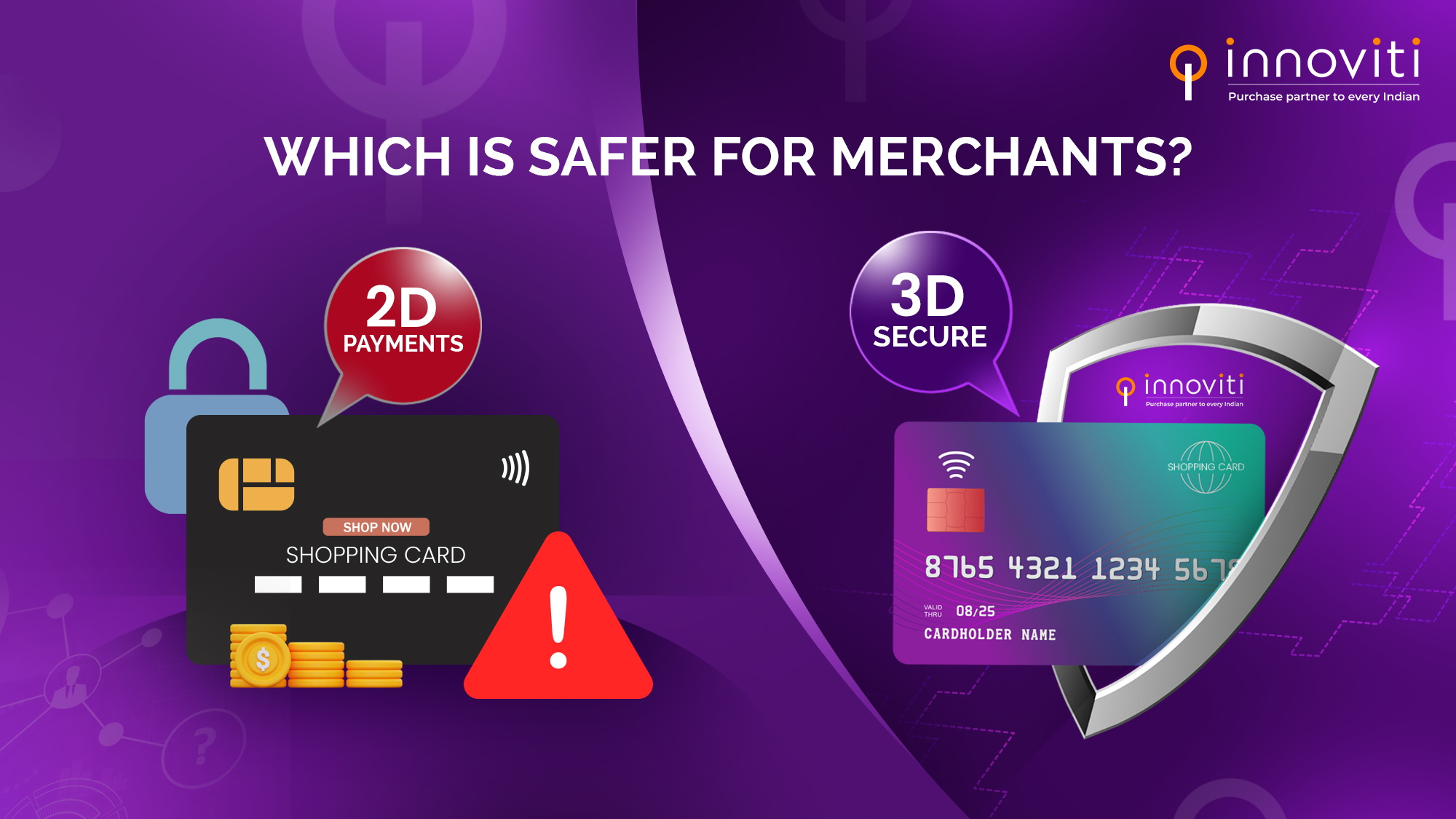
If you are one of those merchants, here is an instance you will quickly relate to:
A customer pays online. The money leaves his account.
Later, the bank says, “This transaction is disputed.”
And suddenly, the amount is deducted from your settlement.
If this sounds familiar, there’s a good chance your business is using a 2D payment gateway.
Many merchants accept digital payments without fully understanding how they work or where the risks lie. This is why it’s essential to understand what a 2D payment gateway is, how it differs from a 3D payment gateway, and why choosing the right payment flow is crucial to your business.
What is a 2D Payment Gateway?
A 2D payment gateway is a payment process in which the customer enters their card details, such as the card number, expiry date, and CVV. Once done, the payment gets completed.
That’s it.
There is no extra verification step, such as an OTP or password.
In a 2D payment flow:
- Customer enters card details
- Payment is processed directly
- Transaction is completed
It’s fast and simple, which is why many businesses adopt it early on. But this simplicity comes with hidden risks.
Why 2D Payment Gateways Became Popular
2D payment gateways have gained widespread popularity due to the following factors:
- The checkout experience is quick
- Fewer steps mean fewer drop-offs
- Customers don’t need to wait for OTPs
For businesses focused only on speed, this feels like a win. Especially for online sales, faster checkout often leads to better conversion rates.
However, speed is not the only thing that matters in payments.
The Biggest Risk of Using a 2D Payment Gateway
The biggest problem with a 2D payment gateway is fraud and chargebacks.
Since there is no extra authentication:
- Stolen card details can be misused
- Customers can deny transactions
- Banks often side with the cardholder
When this happens, the merchant usually loses the money.
This risk grows as:
- Your transaction volumes increase
- Your ticket size becomes higher
- Your business scales
For growing businesses, these risks can quietly eat into profits.
What is a 3D Payment Gateway?
A 3D payment gateway adds an extra layer of security to the payment process.
After entering card details, the customer must:
- Enter an OTP
- Or authenticate via bank verification
This extra step confirms that the person making the payment is the real cardholder.
In short:
- 2D = Card details only
- 3D = Card details + authentication
That one extra step makes a big difference.
Why 3D Payment Gateways are Safer for Merchants
With a 3D payment gateway:
- Fraud risk is reduced
- Chargebacks are lower
- Liability shifts away from the merchant
This means:
- Fewer disputes
- More predictable settlements
- Better peace of mind
For businesses that value stability over short-term speed, 3D payments are a safer and smarter choice.
2D vs. 3D Payment Gateway: A Simple Comparison
Here is a quick comparison between 2D and 3D payment gateways in simple words:
2D Payment Gateway
- Faster checkout
- Higher fraud risk
- More chargebacks
3D Payment Gateway
- Slightly longer checkout
- Much safer
- Better protection for merchants
For low-risk, low-value transactions, 2D is acceptable.
But for most businesses, especially retail and enterprise, 3D payment gateway is the safer long-term option.
Why Businesses Often Ignore these Risks
Many merchants don’t switch because:
- “Abhi tak problem nahi aayi”
- They assume fraud happens to others
- Payment systems feel complicated
But payment risks don’t announce themselves. They show up suddenly during peak business periods.
That’s when the cost becomes real.
How Modern Payment Platforms Handle this Better
Modern payment platforms don’t force merchants to choose between speed and safety.
They:
- Balance user experience with security
- Support compliant payment flows
- Adapt to business scale
This is especially important for businesses handling:
- High transaction volumes
- Multiple payment modes
- Both online and offline payments
How Innoviti Approaches Payment Security
Innoviti designs payment solutions with Indian business realities in mind, including busy stores, diverse payment preferences, and growing digital adoption.
Instead of focusing only on transaction completion, Innoviti prioritizes secure payment flows. Also, it:
- Supports compliant, merchant-safe payment experiences
- Helps businesses reduce operational and fraud-related risks
For merchants, this means payments that are not just fast but also dependable.
Why This Matters More as your Business Grows
As businesses grow:
- Transaction values increase
- Fraud exposure rises
- One failed settlement can hurt margins
This is why understanding the difference between a 2D payment gateway and a 3D payment gateway is not just technical knowledge; it’s also a big business decision.
Ready to Make Your Payments Safer?
If your business is still using a basic 2D payment gateway, it might be time to rethink your payment setup.
Innoviti helps merchants move to more secure, reliable payment systems that reduce fraud risk, protect settlements, and support business growth without complicating the checkout experience.
Whether you run a single store or manage multiple locations, Innoviti’s payment solutions are built to handle real-world Indian retail conditions.
When your payments are safer, your worries will be fewer, and your business days will be smoother.
