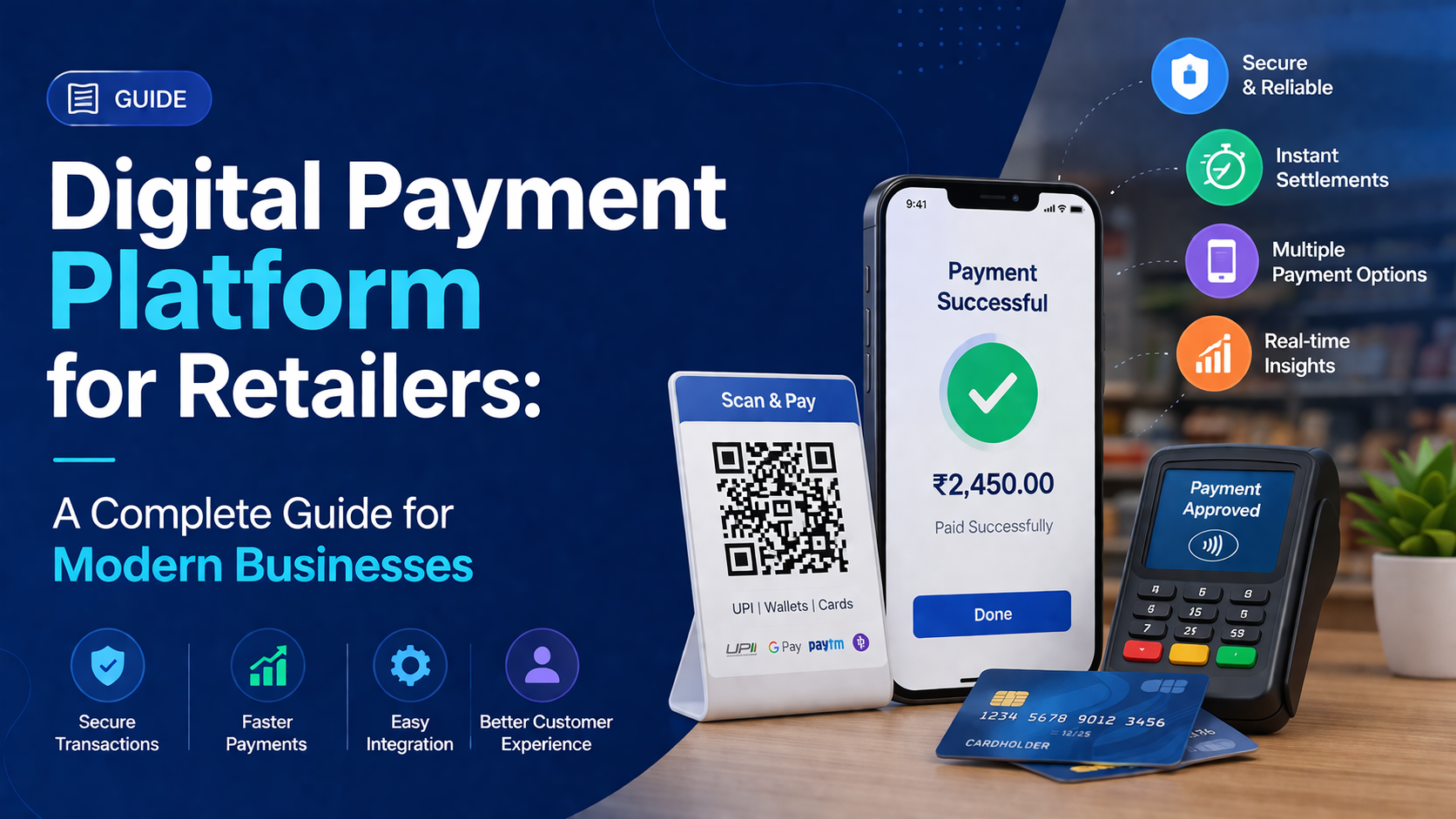
The rise of digital commerce has made a digital payment platform for retailers an essential tool for businesses across India. From retail chains and enterprise merchants to small stores and mobile dealers, modern payment platforms are transforming how transactions are processed and managed.
Customers today expect fast, secure, and flexible payment options, including UPI, cards, wallets, and contactless payments. Retailers that adopt advanced digital payment infrastructure can improve checkout efficiency, reduce payment failures, and enhance customer satisfaction.
A robust digital payment platform not only simplifies transactions but also enables businesses to manage multiple payment methods from a single system.
Companies like Innoviti are leading this transformation by offering innovative fintech solutions that empower retailers with scalable and efficient payment technologies.
Table of Contents
- What is Digital Payment Platform for Retailers
- Why Digital Payment Platform for Retailers Matters for Modern Businesses
- Key Features of Digital Payment Platform for Retailers
- Benefits of Digital Payment Platform for Retailers
- How Digital Payment Platform for Retailers Works
- Real-World Business Use Cases
- Common Challenges Businesses Face
- How Innoviti Helps Businesses Solve These Challenges
- The Future of Digital Payments in India
- Featured Snippet: Digital Payment Platform for Retailers Explained
- Conclusion
- FAQ Section
What is Digital Payment Platform for Retailers
A digital payment platform for retailers is a unified system that enables businesses to accept, process, and manage payments across multiple channels, including in-store, online, and mobile transactions.
These platforms integrate various payment methods such as:
- UPI payments
- credit and debit cards
- digital wallets
- net banking
- payment links
Retailers can use a single system to manage all payment operations efficiently.
Modern businesses rely on integrated merchant payment platform solutions to streamline payment processes and reduce operational complexity.
To better understand digital payment systems, retailers can explore e-payment systems explained.
Why Digital Payment Platform for Retailers Matters for Modern Businesses
The adoption of a digital payment platform for retailers is critical in today’s competitive retail environment.
Changing Consumer Behavior
Customers prefer digital payments due to speed and convenience.
Faster Checkout Experience
Digital payment systems reduce waiting time and improve customer satisfaction.
Omnichannel Commerce
Retailers operating both offline and online need unified payment infrastructure.
Improved Transaction Success Rates
Optimized systems help reduce payment failures. Businesses can learn more from transaction success rate insights.
Key Features of Digital Payment Platform for Retailers
A modern digital payment platform for retailers offers advanced features designed to enhance business efficiency.
Multi-Payment Acceptance
Retailers can accept payments through:
- UPI
- cards
- wallets
- QR codes
Secure Payment Processing
Platforms implement encryption, tokenization, and fraud detection systems.
Retailers should also understand payment fraud prevention strategies.
Integration with POS Systems
Digital payment platforms integrate seamlessly with POS payment solutions.
Payment Links
Retailers can collect payments remotely using payment links for businesses.
Benefits of Digital Payment Platform for Retailers
Implementing a digital payment platform for retailers offers several benefits.
Increased Sales Conversion
Faster payments lead to higher conversion rates.
Improved Cash Flow
Real-time payments ensure faster settlement.
Enhanced Customer Experience
Customers enjoy flexible and convenient payment options.
Business Scalability
Retailers can expand across multiple channels and locations.
Businesses can explore leading online payment companies in India.
How Digital Payment Platform for Retailers Works
Understanding how a digital payment platform for retailers works helps businesses implement it effectively.
Step 1 — Customer Initiates Payment
The customer selects a payment method.
Step 2 — Payment Platform Processes Transaction
The platform securely processes the payment request.
Step 3 — Bank Authorization
The issuing bank verifies and approves the transaction.
Step 4 — Transaction Confirmation
The retailer receives confirmation instantly.
Step 5 — Settlement
Funds are transferred to the retailer’s account.
Retailers can learn more through payment gateway integration guide.
Real-World Business Use Cases
The digital payment platform for retailers is widely used across industries.
Retail Chains
Retailers use integrated payment systems to manage high transaction volumes.
Enterprise Merchants
Large businesses rely on advanced payment infrastructure.
SMB Retailers
Small businesses use digital payment platforms for easy payment acceptance.
Mobile Dealers
Mobile dealers use payment platforms for instant transactions and EMI options.
Retailers can boost sales using social media payment solutions.
Common Challenges Businesses Face
Despite its advantages, a digital payment platform for retailers comes with challenges.
Payment Failures
Technical issues can impact transaction success rates.
Security Risks
Businesses must ensure secure payment processing.
Integration Complexity
Integrating systems with existing infrastructure can be challenging.
Limited Payment Insights
Without analytics, businesses struggle to track performance.
How Innoviti Helps Businesses Solve These Challenges
Innoviti provides advanced solutions for a digital payment platform for retailers.
Innoviti’s unified digital payment platform enables businesses to manage multiple payment channels seamlessly.
Key Advantages
Unified Payment Infrastructure
Manage online and offline payments in one system.
Secure Transactions
Advanced security ensures safe paymen
